

Reading time (fits in your break): 5 minutes
Why do we keep repeating reactions we don't even want?
Have you noticed that in certain situations you react in almost exactly the same way, even though you know it doesn't help?
It might be an outsized emotional response, an automatic flash of discouragement, a recurring struggle to say “no,” or the feeling of freezing up in front of big decisions.
Many people read this as a lack of willpower or a personality flaw. But most of the time, what's really at play are automatic mental patterns.
These patterns don't appear out of nowhere. They're built over a lifetime and reinforced every time the brain finds a solution that “works,” even if it works badly.
The central question isn't “why am I like this?” but:
“What pattern did my brain learn, and is it still running it?”
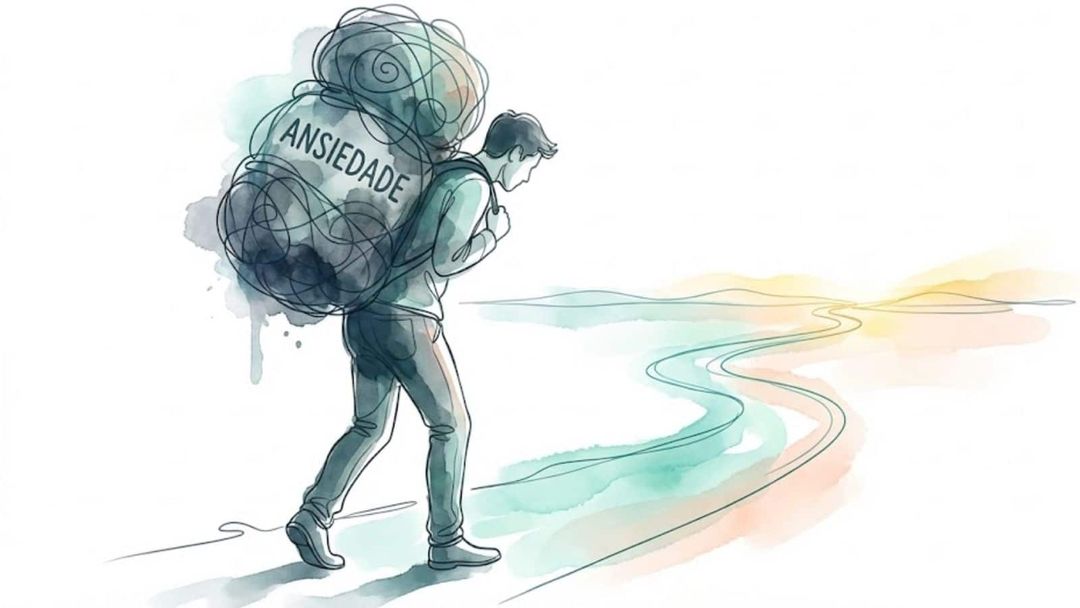
What mental patterns are, according to neuroscience
Mental patterns are well-worn neural circuits that guide how we think, feel and react in certain situations.
From the standpoint of behavioral neuroscience, the brain is after efficiency. To save energy, it creates shortcuts: quick responses based on past experience.
The brain likes repetition, not novelty
Every time a reaction repeats, the neural connections behind it get stronger. That's true both for helpful patterns and for patterns that cause suffering.
That's why:
- the brain repeats what it already knows
- automatic responses show up before reflection does
- change takes awareness and practice
Without realizing it, we start living on “emotional autopilot.”
Emotions, thoughts and decisions follow the same pattern
A mental pattern rarely acts alone. It usually involves:
- a recurring thought (“this always goes wrong”)
- an associated emotion (fear, frustration, anxiety)
- a behavioral response (avoiding, lashing out, giving up, rushing)
This cycle reinforces itself over time, creating the feeling that “it's stronger than me.”
In reality, it's older than it is conscious.
Why mental patterns have so much say in our decisions
Decisions aren't purely rational. They pass through emotional filters and past experiences before they ever reach awareness.
When a mental pattern is active:
- the brain prioritizes safety, not growth
- risk looks bigger than it really is
- change brings immediate discomfort
That explains why so many people feel inner resistance even when they want to change their habits, relationships or attitudes.
Changing patterns isn't an act of force. It's a process of neural reorganization.
How to start changing mental patterns in everyday life
The good news is that mental patterns can change. But that doesn't happen by trying to “think positive” or by forcing yourself to act differently without awareness.
1) Identify the pattern before you try to change it
Why it works (neuroscience):
Awareness brings in areas of the prefrontal cortex involved in choice and regulation. In a 2007 brain-imaging study at UCLA led by Matthew Lieberman, simply putting a feeling into words increased activity in a prefrontal region and dampened the amygdala's response.
How to apply it:
Notice:
- which situations bring the pattern out
- which thought shows up first
- which emotion comes with it
No judging. Just mapping.
2) Tell the past apart from the present
Why it works:
Many patterns were learned in old contexts but are still being used today.
How to apply it:
Ask yourself:
- “Is this still true now?”
- “Does this reaction make sense for this moment?”
- “Am I responding to the present or to the past?”
Making that distinction weakens the automatic pattern.
3) Create small, conscious variations
Why it works:
The brain learns best from small, repeated adjustments.
How to apply it:
Instead of changing everything, try:
- responding a little differently
- delaying an automatic reaction
- taking a slightly new step
These variations build new neural pathways.
4) Swap self-blame for curiosity
Why it works:
Criticism puts you on the defensive; curiosity opens you up to learning.
How to apply it:
Replace “why do I do this?” with:
- “what is this pattern trying to protect me from?”
- “what did it teach me in the past?”
- “what can I learn now?”
Guided exercise: recognizing your mental patterns
Set aside a few minutes to reflect:
- What situation tends to throw me off emotionally?
- What thought shows up almost automatically?
- What emotion comes with it?
- How do I usually act afterward?
- What could I try differently, even if it's small?
This exercise isn't about getting rid of patterns, but about bringing them into awareness, the first real step toward change.
How EITA Mentor helps you change mental patterns
Mental patterns tend to act fast, before reflection catches up. That's why support at the right moment makes a difference.
EITA Mentor works right at that point. On WhatsApp, she helps you:
- identify recurring emotional patterns
- sort through automatic thoughts
- recognize triggers and repeating cycles
- try out new possible responses
- make more conscious choices
All of it is grounded in the method of Anaclaudia Zani, neuroscientist and psychologist, creator of the EITA method, which brings together neuroscience, behavior and everyday practice.
EITA doesn't do your reflecting for you: she guides it.
Get to know EITA and start training your mind today
You don't have to change everything at once.
Changing patterns starts with awareness and support.
Spot your patterns, sort out your thoughts and choose differently.
Want support building and sticking with a self-care routine?
Meet EITA Mentor: an AI specialized in mental health, for emotional check-ins, regulation practices and self-knowledge at your own pace. It supports your day-to-day practice and does not replace therapy.
Visit: mentoravirtual.com.br | Follow: @eita.mentoravirtual (in Portuguese)
Sources
- Lieberman, M. D., Eisenberger, N. I., Crockett, M. J., Tom, S. M., Pfeifer, J. H., & Way, B. M. (2007). Putting feelings into words: Affect labeling disrupts amygdala activity in response to affective stimuli. Psychological Science, 18(5), 421-428. PubMed record
Anaclaudia Zani is a psychologist (CRP 06/128106, Brazil) and neuroscientist, creator of the EITA method and of EITA Mentor.