
Reading time (short enough for your break): 4 minutes
EITA Mentor offers in-depth, guided conversations that help people understand their conflicts and find emotional clarity. But contrary to what many people assume, it isn't simply an artificial intelligence built for mental health.
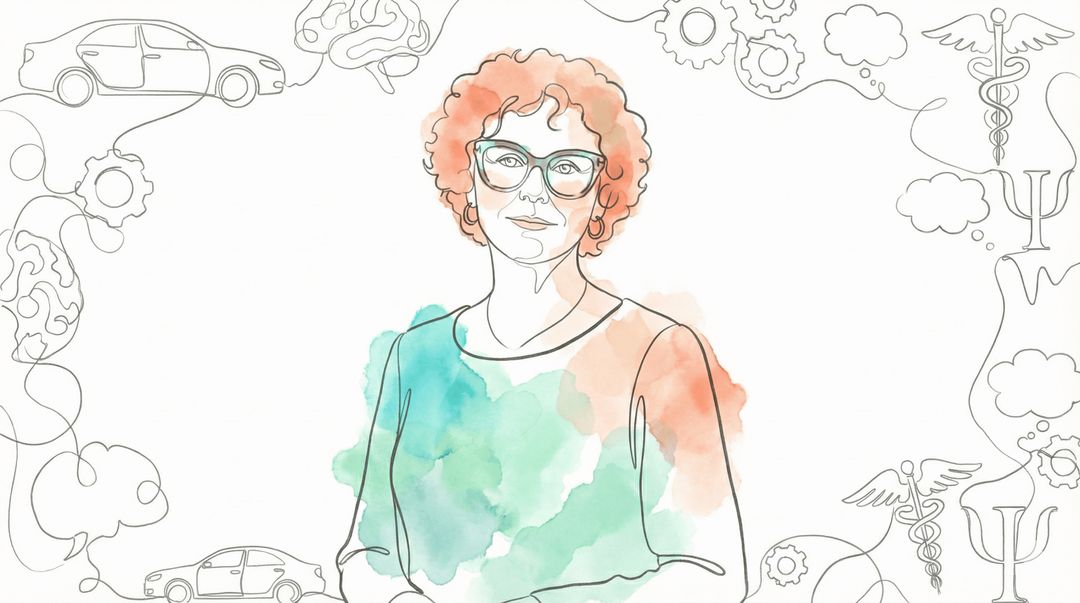
The virtual mentor works as an emotional guide, trained on a human methodology created by neuroscientist and psychologist Anaclaudia Zani, which brings together science, emotional awareness and technology to widen access to emotional care.
To understand how the virtual mentor works, you need to know who structured the knowledge it carries.
From a simple idea to applied science: where the method comes from
At the heart of Anaclaudia's work is one idea: naming emotions changes how we live them. It's more than a figure of speech. Brain imaging research has shown that putting feelings into words reduces activity in the amygdala, the brain's alarm center.
Her approach brings together psychology and neuroscience, with a focus on emotional regulation.
From that foundation came a method of her own, built around expanding emotional awareness, reorganizing internal patterns and preventing crises before they turn into physical or emotional suffering.
The method created by Anaclaudia Zani combines neuroscience, psychology and emotionally intelligent AI, and it is the foundation of EITA Mentor.
The method that taught the virtual mentor to talk like a human guide
Anaclaudia's core insight is that most people don't struggle because they lack ability, but because they lack an emotional repertoire.
Her method helps people build essential skills such as:
Recognizing triggers and patterns
Understanding which situations set off automatic reactions and repetitive behaviors.
Reading emotions accurately
Identifying, naming and understanding feelings clearly and consciously.
Regulating reactions in the middle of conflict
Learning to respond to challenges with emotional balance instead of reacting on impulse.
Making more conscious decisions
Developing the clarity to act with intention, not just under emotional pressure.
This set of skills is the foundation that shapes how EITA Mentor communicates with its users today.
How EITA Mentor was born
It started with the realization that few people had access to the emotional tools that can change lives, which raised a fundamental question:
How do you make this knowledge available to everyone without relying only on the therapy room?
Mental health technology became the answer.
EITA Mentor translates Anaclaudia's method into practical guidance, learning paths, reflections and guided conversations. It doesn't replace therapy and doesn't present itself as a mental health professional. Its role is to act as a virtual emotional guide, helping users understand what they feel, organize their thoughts and see possible ways forward, safely and realistically.
From a method to technology within everyone's reach
Anaclaudia's work isn't just background for the virtual mentor. It's the foundation that gives the technology its soul.
Every insight the virtual mentor offers comes from a deep understanding of how emotions form, how they get disorganized and how they can be reorganized with awareness.
EITA Mentor is the natural next step for that work, bringing together science, sensitivity and technology to offer emotional care to the people who need it, right when they need it.
Frequently asked questions
Who is Anaclaudia Zani and what is her background?
Anaclaudia Zani is a psychologist (CRP 06/128106, Brazil) and neuroscientist, creator of the EITA method and of EITA Mentor.
What inspired the method behind the virtual mentor?
The starting point is the idea at the core of her work: naming emotions changes how we deal with them. From there, she turned that principle into a practical, repeatable method, built so that more people could have access to it.
What is the core insight behind the method?
That most people don't struggle because they lack ability, but because they lack an emotional repertoire. The method develops skills such as recognizing triggers and patterns, reading emotions accurately, regulating reactions in conflict and making more conscious decisions, the same skills that shape how the virtual mentor talks with you today.
Does EITA Mentor replace therapy?
No. It doesn't present itself as a mental health professional and doesn't replace therapy. It works as a guide: it translates Anaclaudia's method into practical guidance, learning paths, reflections and guided conversations that help users understand what they feel, organize their thoughts and see possible ways forward, safely and realistically.
Why did the method become technology?
The move to technology came from a question: how do you make this knowledge available without depending only on the therapy room? EITA Mentor is the answer: a way to bring applied science, with sensitivity, to many more people, offering emotional care to those who need it, when they need it.
Sources
- Lieberman, M. D., Eisenberger, N. I., Crockett, M. J., Tom, S. M., Pfeifer, J. H., & Way, B. M. (2007). Putting feelings into words: affect labeling disrupts amygdala activity in response to affective stimuli. Psychological Science, 18(5), 421-428. sanlab.psych.ucla.edu (PDF) · PubMed record
Anaclaudia Zani is a psychologist (CRP 06/128106, Brazil) and neuroscientist, creator of the EITA method and of EITA Mentor.