
Reading time (short enough for your break): 5 minutes
When anxiety stops being an alarm and turns into overload
Feeling anxious now and then is natural. Anxiety is part of the brain's protection system, and it helps us anticipate risks, plan ahead and steer clear of danger.
The problem starts when anxiety stops being occasional and becomes part of everyday life. Racing thoughts, a constant sense of urgency, trouble focusing, physical tension and mental fatigue start to feel normal.
Many people describe:
- trouble “switching off” their mind
- excessive worry about what might happen
- feeling like they're always running behind or owe someone something
- a body on high alert even when they're resting
Which raises the question: why does the brain stay anxious even when there's no real, immediate danger?
The answer lies in how the nervous system learns and adapts to stress.
What neuroscience tells us about anxiety
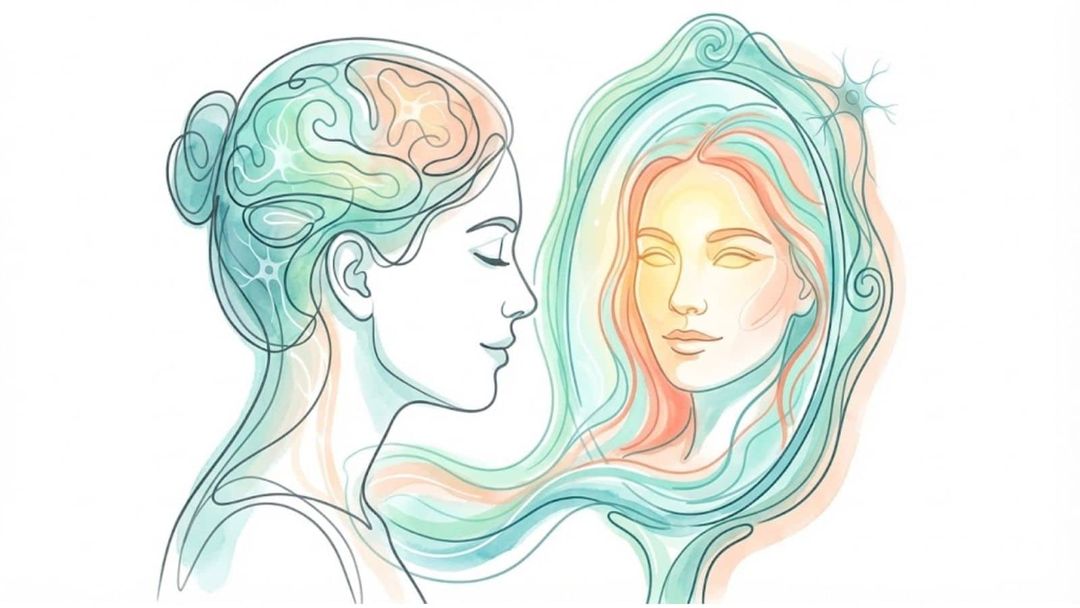
From a neuroscience perspective, anxiety is an anticipatory response. The brain tries to predict what could go wrong so it can protect itself.
Anxiety and the brain in prediction mode
When we go through long stretches of emotional pressure, overstimulation or uncertainty, the brain learns to run in constant prediction mode.
In this state:
- the body releases stress hormones more often
- your thinking gets pulled toward future scenarios
- the present loses its sharpness
The brain starts acting as if the risk is always just around the corner, even when it isn't.
Why anxiety gets in the way of focus and mental clarity
Anxiety eats up mental resources. A large share of your mental energy goes into scanning for risks, which leaves less for concentrating, planning and making decisions.
That's why anxious people often say things like:
- “I know what I need to do, but I just can't”
- “My mind won't stop”
- “I either freeze up or go into overdrive”
Anxiety isn't a lack of competence. It's nervous system overload.
How to deal with anxiety in a practical, science-based way
Reducing anxiety doesn't mean getting rid of thoughts or emotions. It means teaching your brain to leave threat mode and come back to presence mode.
1) Calm your body before you try to control your mind
Why it works (neuroscience):
Your body sends your brain a constant stream of signals. When your body slows down, your brain reads that as safety.
How to use it day to day:
- stretch your neck and shoulders
- relax your jaw and tongue
- breathe more slowly for 1 to 2 minutes
Before you try to “think better,” help your body come down from high alert.
2) Name the anxiety instead of fighting it
Why it works:
Putting a name to an emotion reduces amygdala activation and increases emotional awareness.
How to use it:
Instead of “I can't feel this way,” say to yourself:
- “I'm feeling anxious right now”
- “My body is on alert”
This lowers the resistance and dials down the intensity of the anxious state.
3) Bring your mind back from the future to right now
Why it works:
Anxiety lives in the future. Focus lives in the present.
How to use it (quick exercise):
- silently name 3 things you can see
- 2 sounds you can hear
- 1 physical sensation
This simple exercise helps your brain reorient itself in the here and now.
4) Trade urgency for the next possible step
Why it works:
An anxious brain overthinks and underacts, or acts on impulse.
How to use it:
Ask yourself:
- “What's the next small (and doable) step right now?”
- “What's within my control at this moment?”
This brings back clarity and eases the overload.
Guided exercise: sorting out your anxiety instead of amplifying it
Set aside a few minutes and answer:
- What's worrying me right now?
- Is it actually happening, or is it a prediction?
- What's up to me today?
- What can wait until later?
- What would help my body feel safer right now?
This kind of reflection cuts down on rumination and strengthens emotional control.
How EITA Mentor supports people living with anxiety
In real life, anxiety tends to show up at the worst possible times: in the middle of work, at night, before an important conversation, or when everything seems to pile up at once.
EITA Mentor was created to support you in exactly those moments.
On WhatsApp, EITA:
- helps you identify your anxiety triggers
- organizes racing thoughts
- guides reflections that ease the sense of urgency
- keeps your focus on what's possible right now
- supports your decisions with more clarity and less fear
All of it is based on the methodology of neuroscientist and psychologist Anaclaudia Zani, with respect for each person's emotional context.
Start training your mind today
You don't have to wait for anxiety to turn into exhaustion before you look for support.
Taking care of your mental health can be simple, accessible and ongoing.
Guided conversations to ease anxiety and get your mental clarity back.
Want support building a self-care routine and sticking with it?
Meet EITA Mentor: an AI built for emotional well-being, with emotional check-ins, regulation practices and self-discovery at your own pace.
Visit: mentoravirtual.com.br | Follow: @eita.mentoravirtual (in Portuguese)
Sources
- Lieberman, M. D., Eisenberger, N. I., Crockett, M. J., Tom, S. M., Pfeifer, J. H., & Way, B. M. (2007). Putting feelings into words: affect labeling disrupts amygdala activity in response to affective stimuli. Psychological Science, 18(5), 421-428. PubMed record
Anaclaudia Zani is a psychologist (CRP 06/128106, Brazil) and neuroscientist, creator of the EITA method and of EITA Mentor.