
An emotional support tool on WhatsApp uses neuroscience to help you organize your thoughts and rein in impulses
EITA Mentor is a Brazilian artificial intelligence built specifically for emotional support, created by neuroscientist and psychologist Anaclaudia Zani. Unlike ordinary chatbots, it follows a method developed by Zani to help people organize their thoughts, reason through their emotions and build emotional autonomy.
Available 24 hours a day on WhatsApp, the AI exchanged 500,000 messages with 10,000 Brazilians between June and early December 2025, according to the Brazilian business magazine Exame, and it has become a source of support in moments of anxiety, conflict and emotional overload.
How the emotional support AI works in practice
EITA Mentor works through structured cycles of strategic questions:
1. Private and easy to reach
You can talk to the AI at any hour, privately. There's no complicated sign-up and no need to tell it who you are. Privacy is built in from the very first message.
2. Short cycles of questions
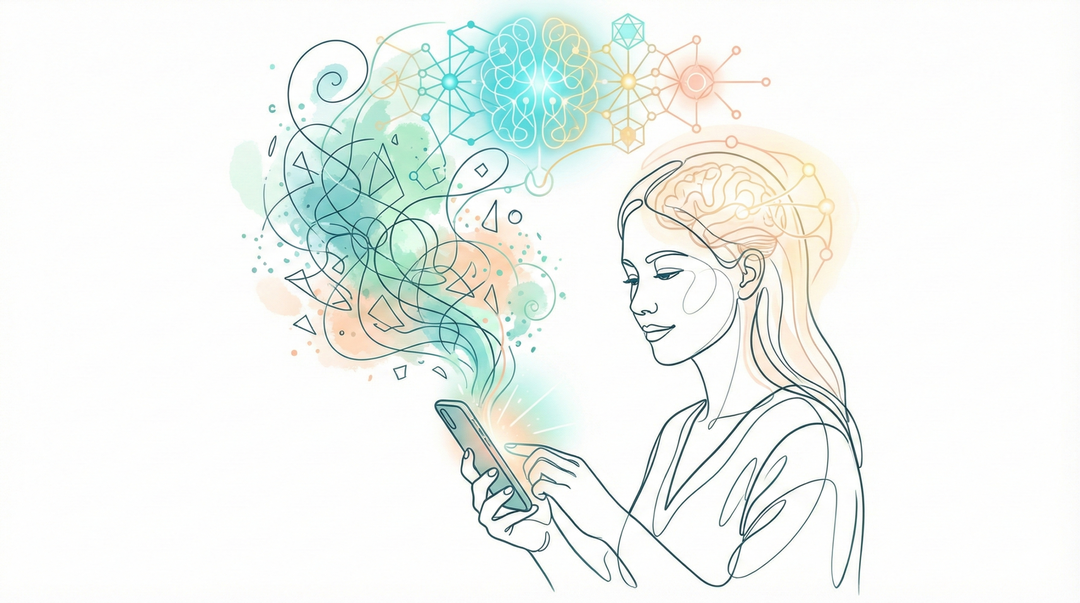
The system runs short cycles of questions designed to pull the brain out of autopilot and rein in impulses. Each question is carefully crafted to prompt self-reflection and raise your awareness of what's really going on.
3. Structured emotional organization
The tool works as immediate emotional support, helping you:
• Understand what you're really feeling
• Organize your thoughts clearly
• Spot patterns in your behavior
• Find small, practical steps for handling everyday problems
• Take the edge off emotional crises
4. Real-life situations
People turn to it especially in moments like these:
• Sudden anxiety: when you feel like you're losing control
• Family conflict: arguments, misunderstandings, hurt feelings
• Insecurity at work: career decisions, changes, challenges on the job
• Emotional overload: when everything feels like too much at once
• Relationship problems: doubts about love, breakups, conflict with a partner
What sets EITA Mentor apart
Here's what makes EITA Mentor different from other emotional support AIs on the market:
A method developed by Anaclaudia Zani
Unlike conventional chatbots that offer generic, automated responses, EITA Mentor was trained by its creator, neuroscientist and psychologist Anaclaudia Zani. In her clinical work, she noticed a common pattern in the way people respond to conflict: the tendency to trigger primitive defense systems, such as fight or flight.
EITA is based on a method developed by Anaclaudia Zani, built on questions that prompt the brain to question itself, raising awareness and strengthening the ability to reason through emotions.
It doesn't replace therapy: it complements it
The AI works as complementary mental health support and makes no claim to replace traditional therapy. The tool:
• Doesn't diagnose: it doesn't identify mental disorders
• Doesn't prescribe treatment: it doesn't recommend medications or therapies
• Focuses on emotional organization: it helps you structure your thoughts and emotions
• Offers immediate support: it's available 24/7, whenever you need it
WhatsApp: removing barriers to access
Choosing WhatsApp as the way in was no accident. In Brazil, WhatsApp had more than 147 million active users in 2024, according to Statista figures cited by Opinion Box, so the app removes technology barriers and lets people from very different socioeconomic backgrounds get emotional support without having to:
• Download a new app
• Fill out complicated sign-up forms
• Figure out a confusing interface
• Learn a new technology
• Own a top-of-the-line smartphone
That kind of access is essential for reaching lower-income Brazilians, the groups the country's socioeconomic scale calls classes C and D. According to Exame, that's where the 10,000 Brazilians EITA had talked with by December 2025 came from.
Safeguards against dependence
Another thing the tool is careful about is not becoming addictive. The level of unmet emotional need in Brazil is so high that a tool like this could, without meaning to, create dependence.
That's why EITA Mentor has protocols that:
• Discourage excessive use: they flag when use goes beyond what's healthy
• Limit access when needed: temporary pauses that protect your autonomy
• Encourage real-world connection: they suggest talking to the people close to you
• Build autonomy step by step: they teach techniques you can use on your own
The goal isn't for people to rely on the virtual mentor forever, but for them to learn to recognize and handle their own emotions on their own.
Why Brazil needed EITA
The topic matters even more in light of the country's alarming mental health numbers:
Brazil: the world leader in anxiety
According to the WHO report Depression and Other Common Mental Disorders (2017), Brazil has the highest prevalence of anxiety disorders in the world: 9.3% of the population, compared with a global average of 3.6%.
At the same time, Brazil's public health system (SUS) has a long-standing shortage of psychologists. A survey by Instituto República.org, published by the newspaper Folha de S.Paulo in 2023, found a national average of 0.18 public-sector psychologists per 1,000 residents, and that 9 out of 10 Brazilian municipalities have fewer than one public-sector psychologist per 1,000 residents.
Very limited access
Emotional care is still a privilege of the few. According to the Mental Health Panorama (Panorama da Saúde Mental, by Instituto Cactus and AtlasIntel, with data collected in 2023), only 5% of Brazilians are in psychotherapy, while 16.6% take medication on an ongoing basis.
EITA Mentor was created as a bridge across that critical gap, offering immediate support to people who can't make it to a therapist's office.
Barriers EITA breaks down:
• Cost: a subscription instead of paying by the session
• Geography: available anywhere with an internet connection
• Time: 24 hours a day, 7 days a week
• Stigma: private, judgment-free conversations
• Waiting: immediate support, with no waitlists or appointments
Who EITA Mentor is for
This emotional support AI is for anyone who:
• Feels anxious, stressed or emotionally overloaded
• Needs to organize their thoughts and emotions
• Wants to build emotional intelligence
• Doesn't have access to traditional therapy
• Wants to complement the psychological care they already receive
• Deals with conflict in everyday life
• Wants to learn emotional self-regulation techniques
How to get started
To start using EITA:
• Use it on WhatsApp: no downloads or complicated sign-up
• Pick a subscription: you'll find the current plans here
• Always available: use it whenever and wherever you need it
• Privacy built in: your conversations are confidential
• In English: the conversations work in English, while the 21-day method materials and the EITA Academy courses are in Portuguese
The bottom line: technology in the service of mental health
EITA Mentor represents a new way to reach mental health support in Brazil. With a method developed by Anaclaudia Zani, safeguards against dependence and accessible pricing, it opens up emotional support in a country where millions suffer in silence for lack of options.
It's not a replacement for therapy, but it is a powerful ally for anyone looking to organize their thoughts, build emotional autonomy and have immediate support in the hardest moments.
Frequently asked questions about EITA Mentor
1. Does EITA Mentor replace therapy?
No. The virtual mentor is a complementary tool for emotional organization. It doesn't diagnose, doesn't prescribe treatment and doesn't replace care from psychologists or psychiatrists.
2. How does EITA Mentor make sure I won't become dependent on it?
The tool has protocols that discourage excessive use and limit access when needed. The goal is to build emotional autonomy, not dependence.
3. Are my conversations private?
Yes. Your conversations are confidential, and you don't have to tell EITA who you are. Your data is handled securely and privately.
4. How is EITA Mentor different from other AIs like ChatGPT?
The virtual mentor was built specifically for mental health, using a method developed by Anaclaudia Zani. General-purpose AIs like ChatGPT weren't designed specifically for emotional support and can give generic or even harmful answers.
5. How do I sign up?
You can see the current plans on the plans page. You use EITA directly on WhatsApp, with no downloads or complicated sign-up.
Keywords:
EITA Mentor, how EITA Mentor works, AI for mental health, emotional support on WhatsApp, emotional support, artificial intelligence and neuroscience, Anaclaudia Zani, accessible mental health
Category:
About EITA Mentor
Sources
- World Health Organization (2017). Depression and other common mental disorders: global health estimates. iris.who.int
- Folha de S.Paulo / Instituto República.org (2023). 9 in 10 cities have fewer than one public-sector (SUS) psychologist per 1,000 residents (in Portuguese). bandab.com.br
- Instituto Cactus and AtlasIntel. Mental Health Panorama in Brazil (in Portuguese). institutocactus.org.br
- Correio Braziliense (2023). Only 5% of Brazilians are in therapy, but 16% take psychoactive drugs (in Portuguese). correiobraziliense.com.br
- Opinion Box (2025). WhatsApp in Brazil survey (in Portuguese). opinionbox.com
- Exame (2025). The psychologist who created an AI to bring emotional support to WhatsApp (in Portuguese). exame.com
Anaclaudia Zani is a psychologist (CRP 06/128106, Brazil) and neuroscientist, creator of the EITA method and of EITA Mentor.