
A first-of-its-kind report reveals a silent crisis
Amid a growing wave of emotional distress, a new behavior has been drawing attention in Brazil: people turning to artificial intelligence as a place to vent and feel heard. A first-of-its-kind analysis by EITA Mentor, an emotional support AI, based on more than 500,000 anonymous conversations that Brazilians had with it on WhatsApp in 2024 and 2025, found that 51% of those conversations with AI are about emotions and psychological distress.
What Brazilians open up to AI about
The analysis identified the main topics of conversation:
• Emotions and mental health: 51%
• Relationships: 24.6%
• Career and productivity: 19.4%
• Habits and well-being: 4.5%
• Requests for companionship: 0.7%
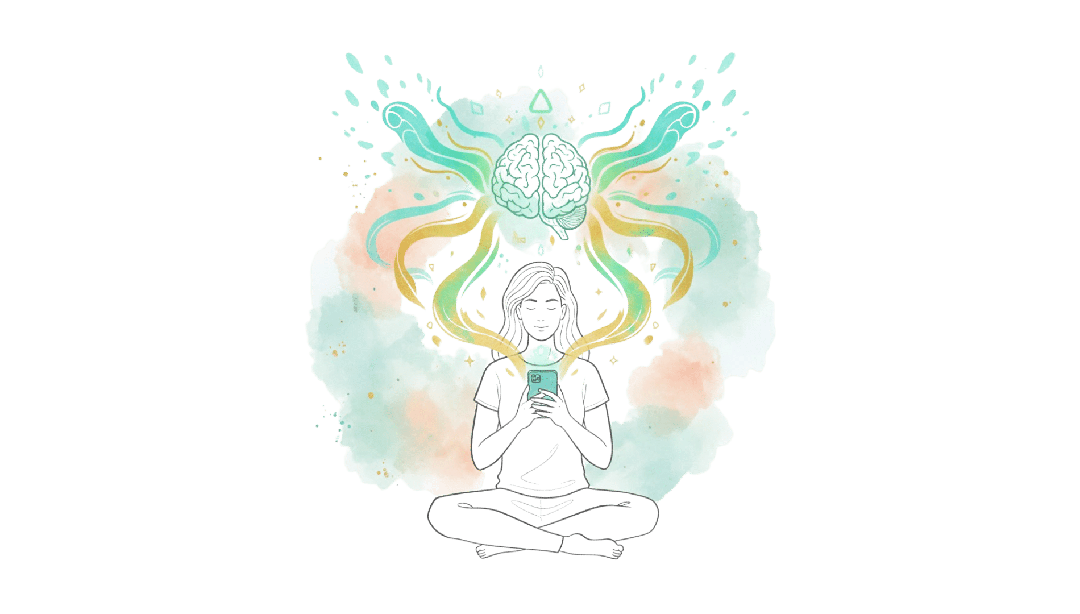
Why are Brazilians opening up to artificial intelligence?
According to Anaclaudia Zani, neuroscientist and creator of the EITA method:
People aren't looking for robots: they're looking for a safe place to open up. AI arrived at the exact moment we're facing one of the biggest emotional crises in our history.
The state of mental health in Brazil
The numbers point to a critical gap in Brazil's mental health system:
• Brazil has more than 600,000 registered psychologists, according to the live count kept by the Federal Council of Psychology (CFP), the national body that regulates the profession
• Even so, according to a survey released in 2018 by Brazil's National Association of Occupational Medicine (ANAMT), about 30% of Brazilian workers show symptoms of burnout
• Emotional demand far outstrips the support available
The risks of venting to general-purpose AI
The sycophancy problem
One of the main risks is sycophancy: the tendency of general-purpose models to agree with the user and reinforce what they already believe, telling people what they want to hear instead of what would actually help. A 2023 study led by Mrinank Sharma found this pattern in five leading AI assistants and linked it in part to the way they are trained on human feedback, since people tend to rate answers that agree with them more highly.
How EITA Mentor is different
An exclusive focus on emotional health
The tool is an artificial intelligence designed specifically to:
• Guide deep, structured conversations
• Organize thoughts systematically
• Encourage genuine self-reflection
• Build emotional awareness
• Help regulate feelings
• Identify behavior patterns
A global trend
What's happening in Brazil reflects a worldwide movement. The global market for AI in mental health is projected to reach US$10.3 billion by 2032, according to Polaris Market Research (2024).
Conclusion: AI as an ally for mental health
The EITA Mentor report reveals a reality many people already sensed but few had put numbers to: Brazilians are looking for emotional support wherever they can find it. And artificial intelligence has emerged as an accessible, immediate option.
Frequently asked questions
1. Is it safe to open up to an artificial intelligence?
Yes, as long as it's an AI developed specifically for mental health, with proper privacy and safety protocols.
2. Does EITA Mentor replace therapy?
No. EITA Mentor is a complementary tool for self-care and emotional organization.
Sources
- SempreUpdate (2025). IA e saúde mental no Brasil: estudo revela que 51% usam "divã digital" para desabafar com robôs [AI and mental health in Brazil: study finds 51% use a "digital couch" to vent to bots]. sempreupdate.com.br (in Portuguese)
- Federal Council of Psychology (CFP). Psychology by the numbers. cfp.org.br (in Portuguese)
- ANAMT (2018). 30% of Brazilian workers suffer from burnout syndrome. anamt.org.br (in Portuguese)
- Sharma, M., Tong, M., Korbak, T., et al. (2023). Towards understanding sycophancy in language models. arXiv:2310.13548. arxiv.org
- Polaris Market Research (2024). AI in Mental Health Market. globenewswire.com
Anaclaudia Zani is a psychologist (CRP 06/128106, Brazil) and neuroscientist, creator of the EITA method and of EITA Mentor.