
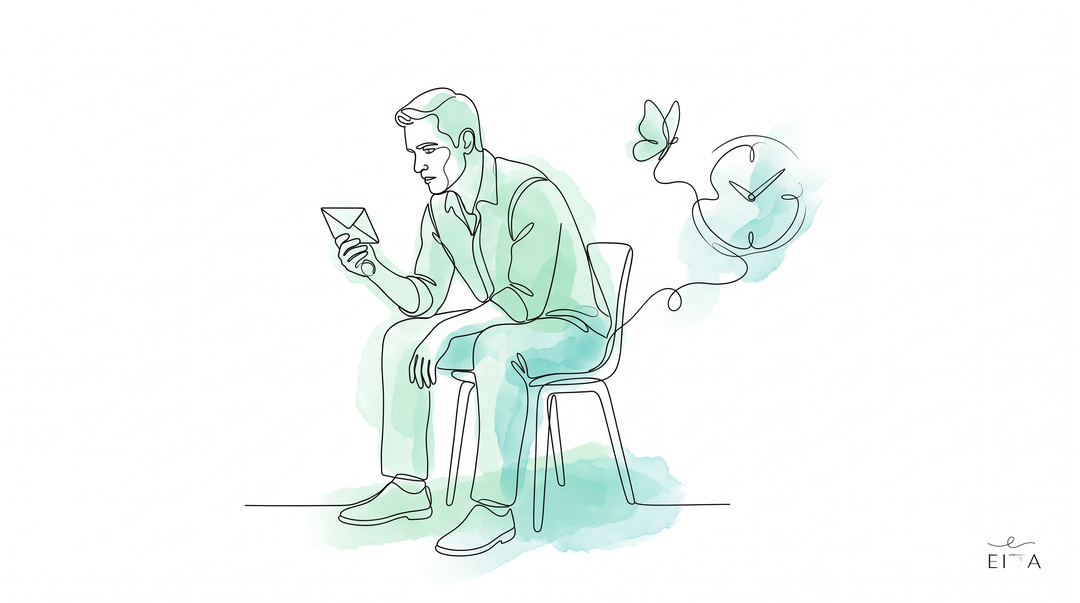
Tuesday, 3:40 p.m. The test results come back Thursday. Mark has known that since last week, and since last week he's been logging into the lab's patient portal about six times a day. There's nothing there. He knows there's nothing there. He logs in again.
On Wednesday he calls to ask whether they can speed things up. The receptionist says no. He hangs up and thinks the sentence almost everyone has thought at least once: I just want it to be over, whatever it is.
The obvious reading of that sentence is impatience. The accurate reading is a lot less comfortable.
The wait can cost more than the news
In 2006, a team at Emory University led by neuroscientist Gregory Berns published a simple and unpleasant experiment in the journal Science. Thirty-two volunteers lay in a functional MRI scanner and received a series of 96 low-voltage shocks to the foot. Before each one, they were told two things: how much it would hurt (as a percentage of each participant's own pain threshold) and how long they would have to wait for it.
Then came the choice, always between two options: more pain now, or less pain a little later.
Most people simply chose to shorten the wait. But 28% of the participants (9 of the 32) did something no economic model predicted: they accepted a stronger shock just so they wouldn't have to wait. Berns called this group "extreme dreaders."
The most interesting finding isn't in the choice, though. It's in the brain scans.
Where waiting hurts (and it's not where you'd think)
If dread were simply fear, the activity would have shown up in the brain's classic fear and anxiety circuits. That's not what the scans showed. The activity clustered in the pain network, and specifically in the parts of it tied to attention. In the extreme dreaders, that activation was stronger and kicked in earlier in each trial.
Berns concluded that the subjective experience of dread comes from the attention devoted to the expected physical response, not simply from a fear or anxiety reaction.
Back to Mark's Tuesday: the wait doesn't hurt because he's fragile, or because he lacks faith, or because he's short on willpower. It hurts because his attention has already moved into an event that hasn't happened yet, and it's stayed there, monitoring his body, checking the portal, rehearsing scenarios. His body is paying the bill for a result that doesn't even exist yet.
That changes the kind of problem we're dealing with. It isn't a courage problem. It's an attention allocation problem. And that's good news, because attention can be trained.
Why uncertainty weighs more than bad news
There's a question almost everyone has asked out loud at some point: why is waiting worse than knowing, even when the news turns out to be bad?
Daniel Grupe and Jack Nitschke, of the University of Wisconsin-Madison, laid out an answer in a 2013 review in Nature Reviews Neuroscience. They propose five processes that explain why uncertainty about a future threat is so disruptive: overestimating the cost and likelihood of the threat, heightened attention to threat and hypervigilance, deficient safety learning, behavioral and cognitive avoidance, and heightened reactivity to uncertainty itself.
The third one deserves a pause. In practice, deficient safety learning means something like this: you've waited on dozens of results in your life, and the overwhelming majority came back fine. That should have made the next wait easier. It didn't. The brain files away threat far more diligently than it files away relief. Every new wait starts almost from scratch, and that doesn't make you a slow learner.
The most common advice is the one that works least
When someone is stuck in a hard wait, the advice is always the same: "Distract yourself." Keep busy. Don't think about it.
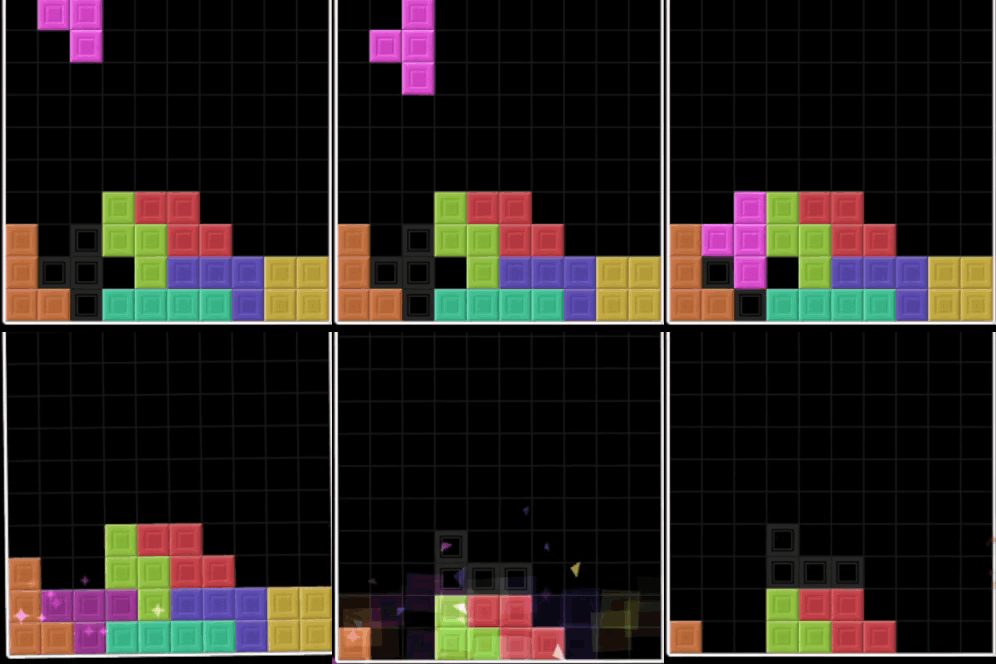
Kyla Rankin, Lisa Walsh and Kate Sweeny, of the University of California, Riverside, tested exactly that and published the results in the journal Emotion in 2019. In their first study, they followed 125 law school graduates through the four-month wait for their California bar exam results. In the third, they had 309 college students play Tetris for ten minutes while waiting for feedback, with the game set to one of three levels: too easy, too hard, or matched to each player's skill.
The group's methodological insight is what matters here. In earlier research, the measure used captured the effort to distract oneself ("I've been trying to distract myself"), not the success. And the people who reported more effort turned out to worry more, not less. In other words, trying to distract yourself and actually being absorbed are two different things, and only the second one helps.
Trying to distract yourself isn't the same as being absorbed
| Trying to distract yourself | Being absorbed |
|---|---|
| Passive activity: scrolling your feed, the TV on in the background, reading without taking anything in | Demanding activity: a game at the right level, a new recipe, an instrument, a hands-on workshop, a tricky spreadsheet |
| Low demand, plenty of mental bandwidth left over | Calibrated demand, no bandwidth left over |
| No clear feedback on how you're doing | Immediate feedback: you can tell right away whether it's going well |
| Your mind drifts back to it every two minutes | You lose track of time |
| More effort reported, more worry reported | Less negative emotion and more positive emotion in the experiment |
An honest caveat: in the Tetris experiment, the calibrated level significantly reduced negative emotions and increased positive ones, but it did not reduce worry to a statistically significant degree. Absorption makes the wait easier to get through. It doesn't erase the wait. Anyone who promises otherwise is selling something.
There's one more detail from the first study that's pure gold for everyday life. When the graduates listed the activities they found most absorbing, the two mentioned most were reading (14.5%) and watching TV or movies (7.7%), precisely the two that don't meet the criteria of challenge and immediate feedback. In other words, people are bad at guessing what will absorb them. You probably are, too.
What to do with a wait: the EITA practice
EITA is a Portuguese acronym for Elevar a Inteligência a Treino de Autopercepção, roughly "turning intelligence into self-awareness training." Applied to a wait, the practice has four moves, and none of them is "don't think about it."
1. Name the wait, not the outcome
There's a huge difference between "I'm scared of the result" and "I'm in a two-day wait." The first sentence drops you into an imaginary scenario. The second describes the real situation you're in: a window of time with a known end. Naming the wait gives shape back to something that had lost its edges.
2. Find where your attention has landed in your body
Berns's finding points straight at attention directed toward the expected physical response. So the useful question isn't "what's going to happen?" It's "where am I feeling this right now?" Chest, jaw, stomach, shoulders. Noticing is what switches off the autopilot, because attention can't be monitoring the future and mapping the body in the present at the same time.
3. Choose absorption at the right level, not just any distraction
Three criteria, straight from the research: the activity has to demand something of you (too easy won't hold you), it has to give you immediate feedback (you know right away whether you got it right), and it needs a clear beginning and end. Scrolling your feed fails all three. A hard game, a new recipe, a piece of music you can't quite play yet, a fiddly and detailed manual task: those pass.
4. Schedule time for the worry instead of banning it
Banning a thought is the surest way to make it come back. Make a deal with yourself: a short, set time to think about it, with a start and a finish. Outside that window, when the thought shows up, you don't push it down: you postpone it to the scheduled time. That's different from running away.
What this looks like in real life
Mark, 49, engineer. He's waiting on biopsy results. Before: six portal logins a day, plus a phone call trying to get the results sooner. After: a ten-minute window at 7 p.m. to think it through and list what he'll do in each scenario, and the portal checked just once, at 8 p.m. The rest of the day is still uncomfortable, but it fits inside a day again.
Rachel, 46, sales manager. She's waiting to hear back on a proposal that would change her family's finances. She noticed she was checking her email at red lights, in the elevator and in the checkout line. She swapped the compulsive checking for two fixed email blocks a day and went back to the pottery classes she'd dropped, a place where she gets things wrong, notices it right away and tries again. That's not distraction. That's demand.
Mark and Rachel are illustrative examples, created to explain the mechanism. They are not real people or accounts from clinical practice.
A wait is easier when you don't go through it alone
EITA Mentor is available 24 hours a day on WhatsApp, Telegram and the web. At three in the morning, when your mind circles back to it and there's no one awake to talk to, she's there to help you name what's happening and get out of autopilot.
Getting through a wait is a skill, not a temperament
"I'm an anxious person, I always have been" describes a history, not a destiny. The adult brain keeps reorganizing its connections around what it practices, and attention is one of the most trainable functions there is. Whatever you repeat, you strengthen.
Look at what most people repeat during a wait: check, rehearse a scenario, check again. That's training too, just in the wrong direction. Each check delivers two seconds of relief and teaches the brain that checking brings relief, which guarantees the next check. Replacing that habit with a different one takes weeks, not minutes, and that's exactly why it has to be practiced on the small waits: the email that hasn't arrived, the follow-up after a meeting, the car in the shop. Nobody learns to swim on the day the ship goes down.
Frequently asked questions
Does this replace therapy?
No. EITA is self-awareness training and day-to-day support, and it doesn't replace psychological or psychiatric care. If waiting anxiety is keeping you from working, sleeping or connecting with people, or if it shows up when there's nothing concrete to wait for, that calls for a professional evaluation. If you are in crisis or thinking about suicide, contact your local emergency number right away. In the US, call or text 988 (Suicide & Crisis Lifeline); in the UK and Ireland, call Samaritans on 116 123; in Brazil, call CVV on 188.
Isn't anticipating the outcome a way of preparing?
Preparing is different from rehearsing. Preparing means deciding what you'll do in each scenario, once, in writing, and then closing the file. Rehearsing means running the same scenario forty times without ever reaching a decision. The first produces something. The second only wears you down, and it's the one that eats up your day.
Why would I rather get bad news right away?
Because for many people, the wait weighs more than the outcome. That's what Berns's study measured in volts: 28% of the participants accepted a stronger shock just to shorten the wait. That isn't irrational. It's the real cost of the waiting state showing up in the math. The trouble starts when that urge pushes you to rush important decisions just to make the discomfort stop.
Does listening to music or watching a show help?
Not much, if it's just background noise. What the Riverside studies suggest is that passive activities don't hold your attention firmly enough, and your mind drifts back to the worry in the space that's left over. If you're going to watch a show, pick one with subtitles and a complicated plot. If it's music, play it instead of just listening. The difference isn't the entertainment. It's the level of demand.
Sources
- Berns, G. S., Chappelow, J., Cekic, M., Zink, C. F., Pagnoni, G., & Martin-Skurski, M. E. (2006). Neurobiological substrates of dread. Science, 312(5774), 754-758. science.org
- Emory University Health Sciences Center (2006). Neurobiology of dread gives scientists clues about human decision making. ScienceDaily. sciencedaily.com
- Grupe, D. W., & Nitschke, J. B. (2013). Uncertainty and anticipation in anxiety: an integrated neurobiological and psychological perspective. Nature Reviews Neuroscience, 14(7), 488-501. nature.com
- Rankin, K., Walsh, L. C., & Sweeny, K. (2019). A better distraction: Exploring the benefits of flow during uncertain waiting periods. Emotion, 19(5), 818-828. escholarship.org
Anaclaudia Zani is a psychologist (CRP 06/128106, Brazil) and neuroscientist, creator of the EITA method and of EITA Mentor.