
Looking after your mental health has become a priority for a lot of people, but finding the time, the money or even the nerve to ask for help isn't always easy. If you've ever felt you needed to talk to someone about your emotions but didn't know where to start, technology can be an ally in your self-care.
EITA Mentor helps people sort through their thoughts and emotions on WhatsApp, in a simple, affordable way. It can be an important first step for anyone who wants to build emotional balance.
Why your brain needs emotional training
According to neuroscientist Anaclaudia Zani, creator of the EITA method and of EITA Mentor, our brains still work a lot like those of our cave-dwelling ancestors.
"It was built to deal with occasional threats, not with the daily avalanche of stimuli and pressure we live with today. Our machine needs training, especially the mind."
When we hit an emotional conflict, the brain automatically switches on a primitive fight-or-flight system. That's why an argument at work can turn into an anxiety spiral, or why a small problem looks enormous at 3 a.m.
The good news? You can train your brain to react differently.
How AI can help in practice
The virtual mentor isn't one of those chatbots that spits out canned, generic answers. It was trained to ask the right questions (the kind that make you stop, think and see the situation from a different angle).
It's like having someone who helps you organize your thoughts when everything feels jumbled. The tool uses a methodology grounded in behavioral neuroscience and asks strategic questions that encourage self-reflection and help you make sense of your emotions.
Here's how it works:
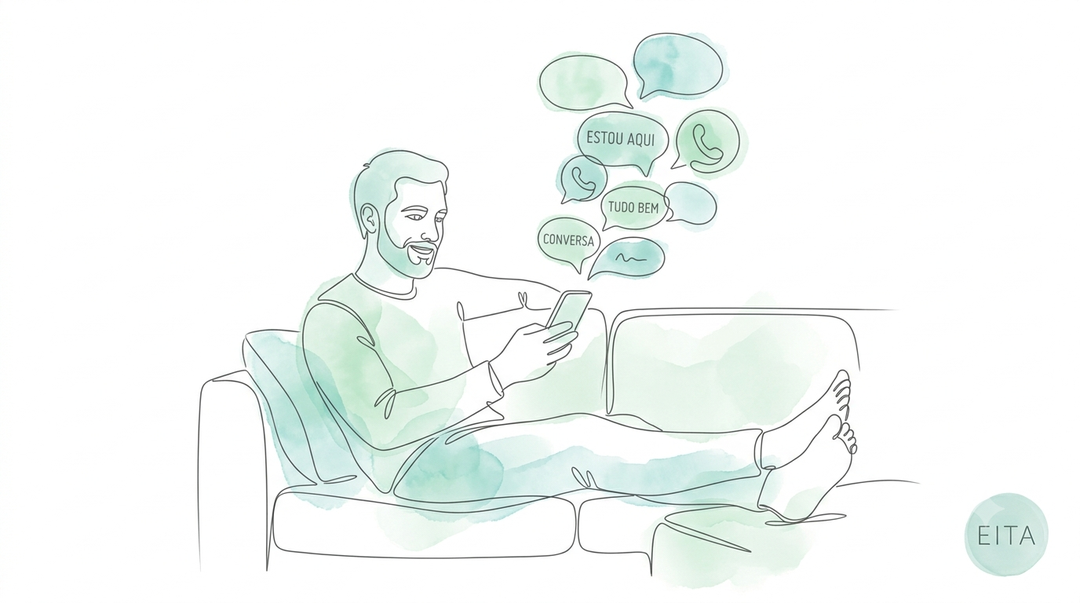
• You chat on WhatsApp, the way you would with a friend
• The AI asks questions that get you thinking about your feelings
• You gradually sort out your thoughts and gain clarity
• It's available 24 hours a day, whenever you need it
Important precautions when using AI for mental health
For all its benefits, it's important to use this technology mindfully. Anaclaudia warns about some of the risks of venting to general-purpose AIs (like ChatGPT or Gemini):
• A false sense of companionship: AI doesn't replace real human connection
• Artificial flattery: General-purpose AIs tend to agree with you to keep you engaged, which doesn't help you grow emotionally
• Social isolation: Overuse can pull you away from important face-to-face conversations
"AI is an ally, but we have to be clear about what it can and can't help with. It doesn't replace traditional therapy."
That's why the virtual mentor was programmed differently: it questions, prompts reflection and even discourages overuse. "Our commitment to mental health comes before pleasing the user. The tool exists to expand emotional awareness, not to create dependence," Anaclaudia explains.
The state of mental health in Brazil
The picture is worrying. According to the 2017 WHO report Depression and Other Common Mental Disorders, Brazil has the highest prevalence of anxiety disorders in the world: 9.3% of the population, compared with a global average of 3.6%.
And care isn't keeping pace. According to the Panorama da Saúde Mental (Mental Health Panorama), by Instituto Cactus and AtlasIntel, with data collected in 2023, only about 5% of Brazilians are in psychotherapy, while 16.6% take medication on an ongoing basis.
"People aren't looking for robots: they're looking for a safe space to vent. AI arrived at a moment when we're facing one of the biggest emotional crises in our history," says Anaclaudia.
Practical tips for using AI as a self-care tool
If you want to try using artificial intelligence to look after your mental health, keep these guidelines in mind:
1. Use it as a complement, not a substitute: AI can help between therapy sessions or when you need to organize your thoughts, but it doesn't replace professional care.
2. Choose specialized tools: Look for AIs built specifically for mental health, with a clear, openly stated methodology, rather than general-purpose chatbots.
3. Set limits on use: Don't overdo it. Set aside specific moments to talk with the AI, without letting it take over all your free time.
4. Keep your real-life connections: Keep nurturing your relationships with friends and family. No technology replaces a hug from someone you love.
5. Get professional help when you need it: If symptoms persist or get worse, see a psychologist or psychiatrist. AI can be a first step, but more complex situations need specialists.
Other self-care practices to pair with AI
To get more out of the technology, combine your use of AI with other healthy habits:
• Exercise regularly: It releases endorphins and helps ease anxiety
• Sleep well: Restorative sleep is essential for emotional balance
• Stay socially connected: Talking with real people strengthens your well-being
• Take mindful breaks: A few moments of breathing make a difference
• Practice mindfulness: Present-moment awareness techniques help regulate emotions
When to seek professional help right away
Even if you use AI tools, watch for signs that you need specialized help:
• Thoughts of suicide or self-harm
• Severe symptoms of depression or anxiety
• Trouble handling basic day-to-day activities
• Prolonged social isolation
• Drastic changes in sleep or appetite
In these cases, see a psychologist or psychiatrist. If you are in crisis or thinking about suicide, contact your local emergency number right away. In the US, call or text 988 (Suicide & Crisis Lifeline); in the UK and Ireland, call Samaritans on 116 123; in Brazil, call CVV on 188.
The future of emotional self-care
Technology is changing the way we care for our mental health, making emotional support more accessible. The global market for AI in mental health is projected to reach $10.3 billion by 2032, according to Polaris Market Research (2024).
"We're living in incredible, paradoxical times. Yes, we're facing a serious emotional crisis. But we're also watching the birth of a technology capable of transforming lives on an unprecedented scale."
Remember: taking care of your mental health is just as important as taking care of your body. And today there are more tools than ever to help you along the way. Small daily acts of self-care make all the difference in the long run.
Frequently asked questions about AI and emotional self-care
1. Can AI really help with mental health?
Yes, when it's built specifically for that purpose. AI can help you organize your thoughts, reflect on yourself and develop emotional awareness, but it doesn't replace professional therapy.
2. What's the difference between using ChatGPT and the virtual mentor?
General-purpose AIs like ChatGPT tend to agree with you to keep you engaged. EITA Mentor was built on a neuroscience-based methodology to question you, prompt reflection and support real emotional growth.
3. Can I use AI instead of going to therapy?
No. AI is a complementary self-care tool, but it doesn't replace care from psychologists or psychiatrists, especially for more complex mental health conditions.
4. How do I avoid becoming dependent on AI?
Set limits on use, keep up your real-life social connections and choose tools that discourage overuse, like EITA Mentor, which has protocols designed to encourage a healthy balance.
5. Is the virtual mentor free?
It's affordably priced, designed to remove cost as a barrier to quality emotional support. Check out the available plans.
Sources
- World Health Organization (2017). Depression and other common mental disorders: global health estimates. iris.who.int
- Instituto Cactus and AtlasIntel. Panorama da Saúde Mental no Brasil (Mental Health Panorama in Brazil) (in Portuguese). institutocactus.org.br
- Associação Médica Brasileira (2023). Apenas 5% dos brasileiros fazem terapia, mas 1 a cada 6 usam medicamentos, mostra pesquisa inédita sobre saúde mental (coverage of the first Instituto Cactus and AtlasIntel survey; in Portuguese). amb.org.br
- Polaris Market Research (2024). AI in Mental Health Market. globenewswire.com
Anaclaudia Zani is a psychologist (CRP 06/128106, Brazil) and neuroscientist, creator of the EITA method and of EITA Mentor.