


Tuesday, 9:47 p.m. You're on the couch, halfway through an episode, when your phone lights up on the armrest. It's the work group chat. Nothing is on fire, nobody wrote "urgent," it's just a question about Thursday's spreadsheet. It could wait until 9 a.m. tomorrow and nobody would be any worse off.
But your hand is already on the phone. You never actually decided to pick it up. Forty seconds later the reply is sent, the episode is still playing, and you realize you've lost the thread of the plot. Worse, your head is now in the spreadsheet. Your body is on the couch. The workday has walked right back into your living room.
If someone asked why you answered right away, the honest answer would be "I don't know, I just couldn't leave it sitting there." That itch has a name, a measurement scale and more than ten years of research behind it. And the most interesting part is that it has very little to do with how many messages you get.
It has a name: telepressure
In 2015, psychologists Larissa Barber and Alecia Santuzzi, then in the Department of Psychology at Northern Illinois University, published a paper in the Journal of Occupational Health Psychology. The title reads like a diagnosis: "Please respond ASAP." In it, they put a name to an experience everybody knew and nobody had measured: workplace telepressure.
The definition has two halves, and both matter. Telepressure is a preoccupation with work messages combined with an urge to answer them quickly. It isn't the act of replying. It's the state of not being able to leave a message alone: it keeps taking up space in your head until you've dealt with it.
The authors built and validated a scale to measure it. And here's the finding that changes the conversation: in the paper's second study, telepressure turned out to be distinct both from people's involvement in and commitment to their jobs and from the demands of the job itself, including technology demands. Even after accounting for all of that, it still helped predict physical and cognitive burnout, missed workdays, poorer sleep quality and the way people responded to email.
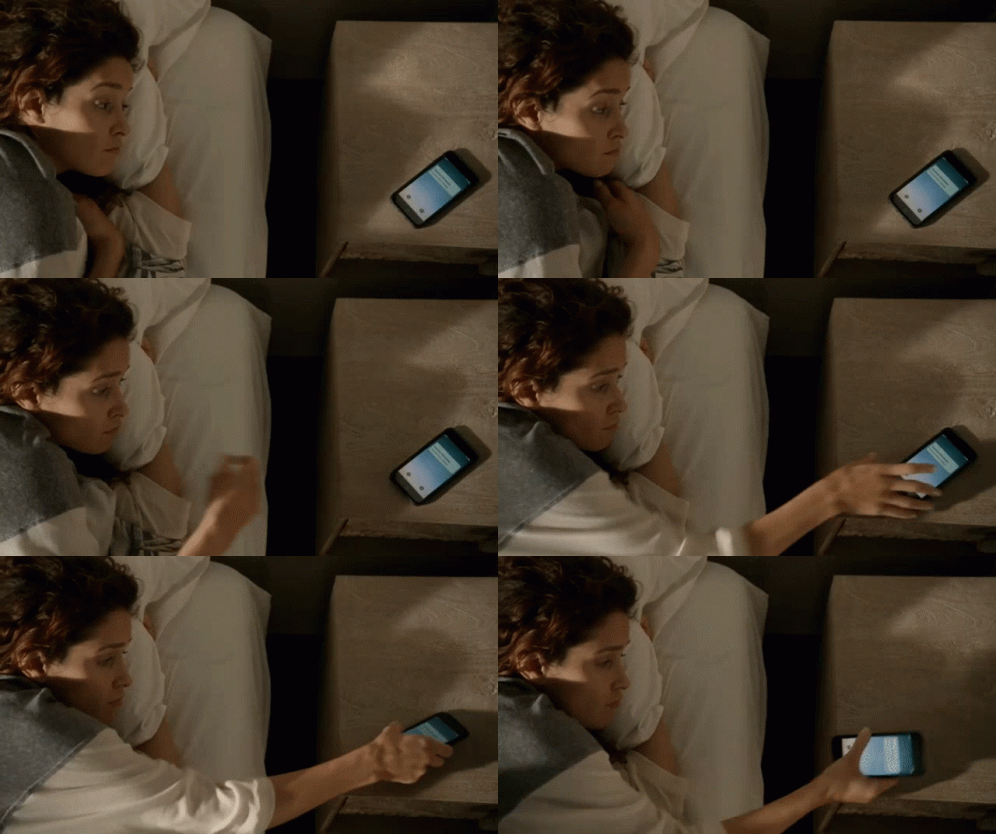
The part almost nobody mentions: it's not about volume
The obvious explanation would be "I answer right away because I get too many messages" or "because I'm that dedicated." The 2015 study pulls those apart. Two people with the same inbox and the same boss can have very different levels of telepressure. The problem doesn't live in the inbox. It lives in your relationship with it.
So where does that relationship come from? The paper's first study offers three clues: telepressure was moderately associated with feeling overloaded by technology, with the sense that your workplace expects fast replies and with a trait called public self-consciousness, the tendency to worry about the impression you're making on other people. Translated to Tuesday night on the couch: you don't reply at 9:47 p.m. because the spreadsheet needs you. You reply because some part of you is managing what people will think of someone who takes their time.
The cost shows up in your downtime. In 2019, Xinyu Hu, Santuzzi and Barber studied 233 full-time workers and published the results in the Journal of Work and Organizational Psychology. People who scored higher on telepressure reported more physical and mental fatigue, worse sleep and more trouble mentally switching off from work. The pathway that best explained the link with physical fatigue and sleep was very concrete: these people crossed the line more often, meaning they let more work into their personal time. One message answered from the couch is small. Crossing that line every night is not.
The rush that only exists on the receiving end
Now for the most reassuring piece. In 2021, Laura Giurge and Vanessa Bohns published a series of eight preregistered experiments, with 4,004 participants in total, in the journal Organizational Behavior and Human Decision Processes. The question was simple: when someone sends a non-urgent work email outside office hours, how quickly do they expect a reply? And how quickly does the person on the other end think they need to reply?
The two answers don't match. Receivers consistently overestimate how much of a hurry the sender is in. The authors called it the email urgency bias. Whoever sent that message at 9:47 p.m. may simply have wanted to get it off their own mind before bed. Whoever received it read a deadline nobody wrote.
What you feel vs. what the studies found
| The gut certainty | What the research found |
| "I answer right away because I get too many messages" | Telepressure is distinct from job and technology demands (Barber and Santuzzi, 2015) |
| "It's dedication, I'm all in" | It's also distinct from job involvement and commitment |
| "They're waiting on my answer right now" | Receivers overestimate how quickly senders expect a reply (Giurge and Bohns, 2021) |
| "Answering fast frees me up to relax" | Higher telepressure went hand in hand with more work spilling into personal time and worse sleep (Hu and colleagues, 2019) |
How big this really is, without the hype
Time for some back-of-the-envelope math, because a number without context just turns into a scare. In the 2019 study, the associations were modest: the correlation between telepressure and mental fatigue was 0.29, with physical fatigue 0.24 and with poorer sleep quality 0.13. On a scale where 1 would be a perfect link, those are small effects. Telepressure is one thread in your exhaustion, not the whole ball of yarn.
There are two more things these numbers don't tell you. These studies are snapshots: they measure everything at the same moment, by questionnaire, so they show that things go together, not that one causes the other. Telepressure might make sleep worse, tired people might be more at the mercy of their phones, or both. And the 2021 experiments are about non-urgent messages. Some jobs come with on-call shifts, clients in crisis and real deadlines. Nothing here is an argument for going dark when someone needs you. It's an argument for no longer treating every notification like an emergency page.
Taking the message out of the driver's seat: the EITA approach
The EITA method trains exactly this: turning an automatic reaction into a conscious process. Applied to the 9:47 p.m. message, the path has four steps.
Step 1: Separate the urge from the task
When your phone lights up, name what showed up before you touch it: "this is the urge to reply, not the need to reply." It sounds like nothing, but it's the same distinction the researchers built into their scale. The message is a task. The itch is something else, and it fades on its own if nobody scratches it.
Step 2: Read the deadline that's written, not the one you imagined
Ask the question from the 2021 study: did the sender ask for a reply now? Is that written anywhere? If it isn't, the deadline is yours, and you tend to shorten it all on your own. When in doubt, apply a discount: the sender's real urgency is usually lower than the one you read into the message.
Step 3: Give the reply an appointment
What keeps a message spinning in your head is that it has nowhere to go. Give it somewhere: "I'll answer tomorrow at 9:10 a.m., before my first meeting." If it helps, jot down one line about what you'll say. Once a task has a set time, it stops tugging at your attention, because it's no longer a loose end. It's a plan.

Step 4: Spell out the expectation when you're the sender
The same 2021 paper tested a fix on the sender's side: a short note making the expected response time clear reduced the bias. So when you're the one sending a message after hours, add one line: "no need to reply tonight, this is for tomorrow." It takes five seconds and can take the pressure off someone else. As a bonus, it teaches the group to do the same for you.
EITA Mentor walks you through this process on WhatsApp, 24 hours a day, including at 9:47 p.m., when the phone lights up and your hand moves before you've decided anything. It won't just tell you to "unplug": it asks the questions that separate the urge from the task and help you set a time to reply, so the rest of your evening is yours again.
Two everyday examples
The examples below are illustrative, created to explain the concept. They are not real people or accounts from clinical sessions.
Mark, 44, sales manager. He answered his team's group chat in under a minute, at any hour, and thought that was leadership. He started adding "for tomorrow" to every message he sent after 7 p.m. Within two weeks the chat got quieter at night, and he realized that a lot of the urgency he felt was an echo of the urgency he himself had been spreading.
Diane, 52, attorney. She ate dinner with her phone face up "because of clients." She ran the Step 2 test for a week: of everything that came in after 8 p.m., nothing had a deadline for that same night. Now she replies at 8:30 a.m., with the message already drafted the evening before, and dinner has a beginning, a middle and an end again.
This is a skill, not a gift
People who can leave a message until tomorrow don't have brains that are immune to notifications. They have a better-trained gap between the urge and the hand. That gap is built through repetition: name the urge, check the written deadline, set the time, state the expectation. The first few times, ten minutes without replying feels like an hour. After a few weeks, the 9:47 p.m. message becomes just a message.
And there's a hidden reward at the end: people who reply at the right time reply better. The 9:10 a.m. answer, thought through, usually settles the matter in one go, while the one thumbed out on the couch at 9:47 p.m. almost always sets off three more rounds of clarification. Less rush, less rework and a whole evening back.
Frequently asked questions
Is telepressure the same as phone addiction or anxiety?
No. Telepressure as described in these studies is specific: it's about work messages and the urge to answer them quickly. It isn't a diagnosis. An anxiety disorder, on the other hand, involves intense, persistent worry across several areas of life, with a real impact on day-to-day functioning. If your restlessness goes well beyond work messages, or comes with frequent physical symptoms, the right move is an evaluation with a psychologist or psychiatrist.
What if my job really does require an immediate response?
Some jobs do, at certain times, and that's a job demand, not telepressure. The difference is in what's left over: if the urge to reply stays just as strong when you're off call, on vacation and looking at messages that can clearly wait, that's telepressure at work. It's worth agreeing with your team, in writing, on what counts as urgent and which channel it comes through. Everything else gets a set time.
Does turning off notifications fix it?
It helps, but it isn't the whole story. The definition of telepressure includes being preoccupied with the message, not just the urge to respond. Plenty of people silence their phones and keep wondering what might have come in. That's why the steps work on both halves: removing the trigger and, above all, giving the matter somewhere to go.
Does this replace therapy?
No. EITA is self-awareness training and everyday support, and it does not replace psychological or psychiatric care. If work is taking over your sleep, your health or your relationships, or if you're dealing with intense, persistent distress, see a professional. And if you're in deep distress right now: if you are in crisis or thinking about suicide, contact your local emergency number right away. In the US, call or text 988 (Suicide & Crisis Lifeline); in the UK and Ireland, call Samaritans on 116 123; in Brazil, call CVV on 188.
Sources
- Barber, L. K., & Santuzzi, A. M. (2015). Please respond ASAP: workplace telepressure and employee recovery. Journal of Occupational Health Psychology, 20(2), 172-189. PubMed record
- Hu, X., Santuzzi, A. M., & Barber, L. K. (2019). Disconnecting to detach: the role of impaired recovery in negative consequences of workplace telepressure. Journal of Work and Organizational Psychology, 35(1), 9-15. Full article (open access)
- Giurge, L. M., & Bohns, V. K. (2021). You don't need to answer right away! Receivers overestimate how quickly senders expect responses to non-urgent work emails. Organizational Behavior and Human Decision Processes, 167, 114-128. Article in the journal
Anaclaudia Zani is a psychologist (CRP 06/128106, Brazil) and neuroscientist, creator of the EITA method and of EITA Mentor.