
Practical strategies to get through moments of distress and regain emotional control
According to a 2018 report from Brazil's National Association of Occupational Medicine (ANAMT), about 30% of Brazilian workers have symptoms of burnout. In a landscape like that, knowing how to interrupt an anxiety attack has become a basic skill.
Neuroscientist and psychologist Anaclaudia Zani, a specialist in human behavior, explains that there are practical, neuroscience-based strategies that can help anyone regain their balance in critical moments.
How anxiety works in the brain
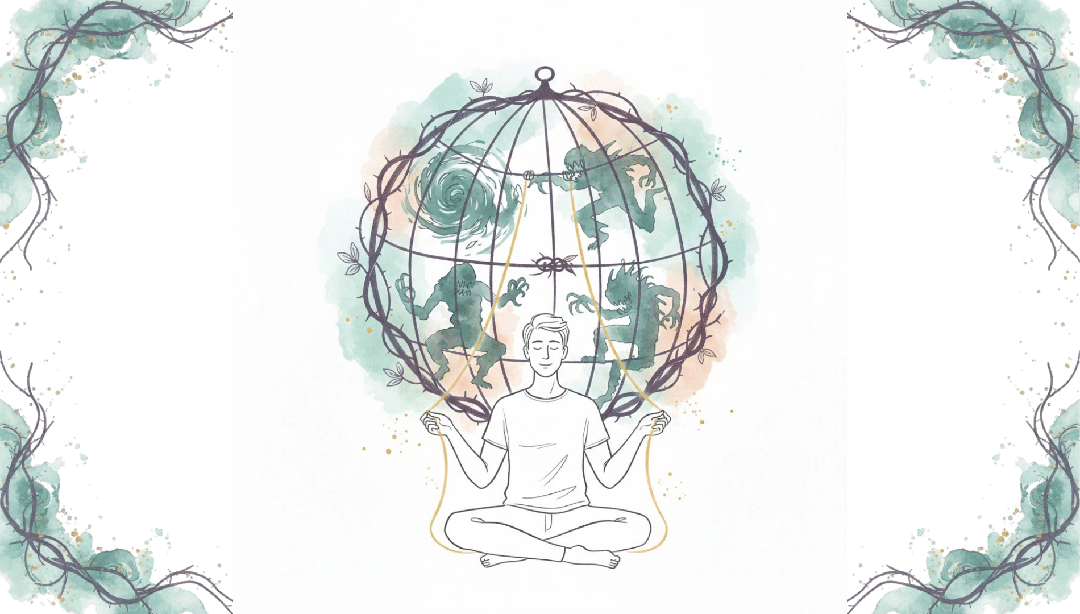
Anxiety works as an anticipation mechanism in our brain. It has us bracing for something that hasn't happened yet, creating an emotional response out of proportion to the actual event.
When we offer techniques that interrupt this cycle, we're literally training the brain to reason through emotions before they take over the body, Anaclaudia explains.
Practical techniques to calm an anxiety attack
The neuroscientist lays out practical strategies you can use right away during an attack:
1. The 5-4-3-2-1 method: anchoring yourself in the present
The 5-4-3-2-1 is a sensory grounding technique widely used in clinical practice to interrupt an attack. To be honest about it: it's a well-established tool in practice, not a treatment backed by large clinical trials.
How to use the 5-4-3-2-1 method:
• 5 things you can see around you
• 4 things you can touch (texture, temperature)
• 3 things you can hear right now
• 2 things you can smell (perfume, the air, food)
• 1 thing you can taste (even just the taste in your mouth)
This technique helps anchor your mind in the present moment, pulling your focus away from worries about the future and bringing back conscious control, the specialist advises.
2. Name the emotion
Anaclaudia stresses the importance of naming the emotion:
The simple act of identifying and putting into words what you're feeling already lowers the intensity of the emotional response. Our brain responds better when it can categorize and understand what's happening.
The idea has support in the lab: in a 2007 brain-imaging study at UCLA, choosing a word for the emotion on a face reduced the amygdala's response to it.
Instead of just thinking "I feel bad," try to be more specific: "I'm feeling anxious because I have a presentation tomorrow" or "I'm afraid of being judged."
3. Control your breathing
The neuroscientist also recommends breath control as an immediate tool. Slow, controlled breathing tends to shift the nervous system toward its parasympathetic side, the branch responsible for relaxing the body, which can help with the pounding heart and the tight chest so typical of anxiety attacks. A 2018 systematic review of slow-breathing studies, by Zaccaro and colleagues, linked breathing at fewer than 10 breaths a minute to changes in autonomic activity, more relaxation and less anxiety and arousal.
The 4-7-8 breathing technique:
• Breathe in through your nose for a count of 4
• Hold your breath for a count of 7
• Breathe out through your mouth for a count of 8
• Repeat 3 to 4 times
4. Get moving: don't just wait it out
Another key point, according to Anaclaudia, is to avoid passively waiting to feel better:
Many people freeze, waiting for the anxiety to pass on its own, but the brain needs action. Small movements, like taking a few steps, splashing cold water on your face or stretching, interrupt the physiological cycle of anxiety.
Quick actions that help:
• Take a few steps
• Splash cold water on your face
• Do a few simple stretches
• Drink a glass of ice water
• Hold an ice cube
• Squeeze a stress ball
Technology in the service of mental health
To make these techniques more widely available and offer immediate emotional support, Anaclaudia Zani created EITA Mentor, an emotional support AI built specifically to train the brain to reason through emotions.
The tool is available on WhatsApp through an affordable subscription. EITA raised R$1 million (Brazilian reais) from healthcare angel investors in December 2024, at a valuation of R$14 million, according to the Brazilian business outlet Startups.
How EITA Mentor works
Unlike traditional therapy, the AI works as a resource for organizing your emotional life day to day. Through structured questions, the AI helps users:
• Identify thought patterns
• Reorganize their emotions
• Develop practical strategies for conflict situations
• Manage anxiety and emotional overload
It's not about replacing psychological care, but about filling a gap: many people suffer in silence because they have no access to emotional support. The virtual mentor offers that support right away, 24 hours a day.
Preventing dependence
The technology was built with mechanisms that discourage excessive use, including limits when there are signs of very frequent use, so that it doesn't become an emotional crutch.
The goal is to empower people to develop their own self-regulation tools, not to create dependence, Anaclaudia emphasizes.
What shows up in conversations on EITA
On the EITA platform, distress, anxiety and psychological suffering account for most of the conversations, and relationships and career also come up often.
This shows that much of the emotional demand lies in organizing everyday emotional life, not only in severe clinical crises, she says.
When to seek professional help
Self-regulation techniques can help with occasional attacks, but it's essential to seek professional help when:
• Anxiety attacks become frequent
• Anxiety gets in the way of daily activities
• You avoid situations for fear of having an attack
• Physical symptoms persist (pain, insomnia, digestive problems)
• You feel you can't manage it on your own
In these cases, see a psychologist or psychiatrist. If you are in crisis or thinking about suicide, contact your local emergency number right away. In the US, call or text 988 (Suicide & Crisis Lifeline); in the UK and Ireland, call Samaritans on 116 123; in Brazil, call CVV on 188.
Frequently asked questions about anxiety attacks
1. How long does an anxiety attack last?
A panic attack usually peaks within about 10 minutes, and most last between 5 and 20 minutes, according to the Cleveland Clinic and the UK's NHS, though some people report attacks lasting up to an hour.
2. Can an anxiety attack turn into panic disorder?
Isolated anxiety attacks are not panic disorder. Panic disorder is characterized by recurrent, unexpected attacks, followed by at least a month of persistent worry about having more. If you have frequent attacks, see a specialist.
3. What if the techniques don't work?
If self-regulation techniques don't bring relief, don't be discouraged. Everyone responds differently. Try combining several techniques and, if the attacks keep happening, seek professional guidance.
4. Can I prevent anxiety attacks?
Yes. Regular habits like exercise, meditation, enough sleep, a balanced diet and emotional organization tools (like EITA Mentor) can help reduce how often attacks happen and how intense they are.
5. Can EITA Mentor help during an attack?
Yes. You can reach EITA Mentor on WhatsApp during an attack for help organizing your thoughts, applying self-regulation techniques and reasoning through your emotions with structured questions.
Sources
- ANAMT (2018). 30% of Brazilian workers suffer from burnout syndrome. anamt.org.br (in Portuguese)
- Scott, K. M., Duncan, K., & McCoy, T. P. (2025). Ground yourself: using five senses technique to cope with test anxiety. Journal of Professional Nursing. sciencedirect.com
- Startups (2026). EITA opens Series A round to scale its AI virtual mentor. startups.com.br (in Portuguese)
- Lieberman, M. D., Eisenberger, N. I., Crockett, M. J., Tom, S. M., Pfeifer, J. H., & Way, B. M. (2007). Putting feelings into words: Affect labeling disrupts amygdala activity in response to affective stimuli. Psychological Science, 18(5), 421-428. pubmed.ncbi.nlm.nih.gov
- Zaccaro, A., et al. (2018). How breath-control can change your life: A systematic review on psycho-physiological correlates of slow breathing. Frontiers in Human Neuroscience, 12, 353. frontiersin.org
- Cleveland Clinic. Panic attacks & panic disorder. my.clevelandclinic.org
- NHS. Panic disorder. nhs.uk
Anaclaudia Zani is a psychologist (CRP 06/128106, Brazil) and neuroscientist, creator of the EITA method and of EITA Mentor.